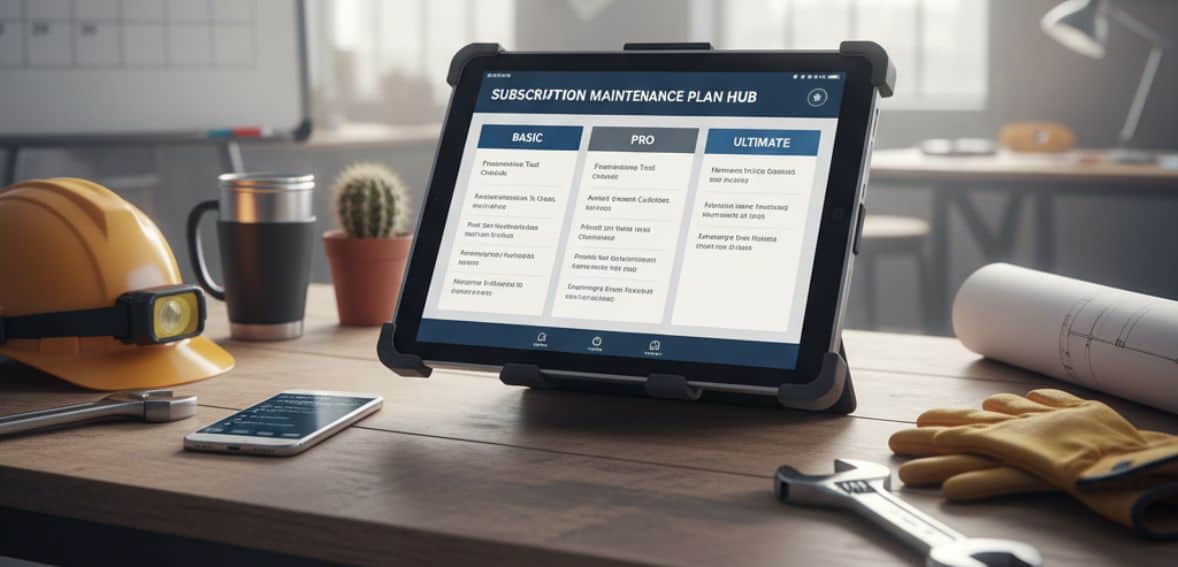
By Christina Ison September 30, 2025
Subscription-based maintenance plans are revolutionizing the way contractors manage their business and revenues. By selling clients fixed maintenance packages on a subscription basis, contractors can maintain a much more better and steady cash flow, enhance customer satisfaction, and minimize downtime.
These plans make scheduling more easier, give predictable revenues, and enable contractors to establish long-term relationships while managing resources effectively.
Subscription-Based Maintenance Plans: A Smarter Way to Manage Equipment

Rather than spending more and more money on costly equipment and having the hassle of keeping track of maintenance, businesses are offered a more better and smoother route through subscription-based maintenance.
Under this system, you’re not only getting access to the equipment you require—you’re also getting full maintenance and support rolled into a subscription package. This very often includes periodical servicing, prompt repairs, and experienced assistance whenever problems arise, all included in a subscription package.
For instance, a business that employs heavy equipment might sign up for a subscription package that includes both equipment usage and maintenance. That way, they can worry less about their operations and leave the day-to-day running to the provider. It’s predictable, inexpensive, and removes the anxiety of unexpected repair costs.
Why Recurring Revenue Is Important
Establishing a subscription work provides regular cash flow that’s simpler to control, these also involve fewer materials and less complicated labor estimates. It also stabilizes seasonal dips, providing crews with much more continuous work throughout the year rather than laying them off during slow times.
In addition to stability, repeat services solidify much more better relationships with current clients for future projects. To investors, repeat revenue is particularly desirable because it reflects financial stability, lower financial risk, and potential long-term growth. This not only increases a contractor’s value but also simplifies obtaining a good cash flow stability when necessary.
Monthly Recurring Revenue Vs. Annual Recurring Revenue
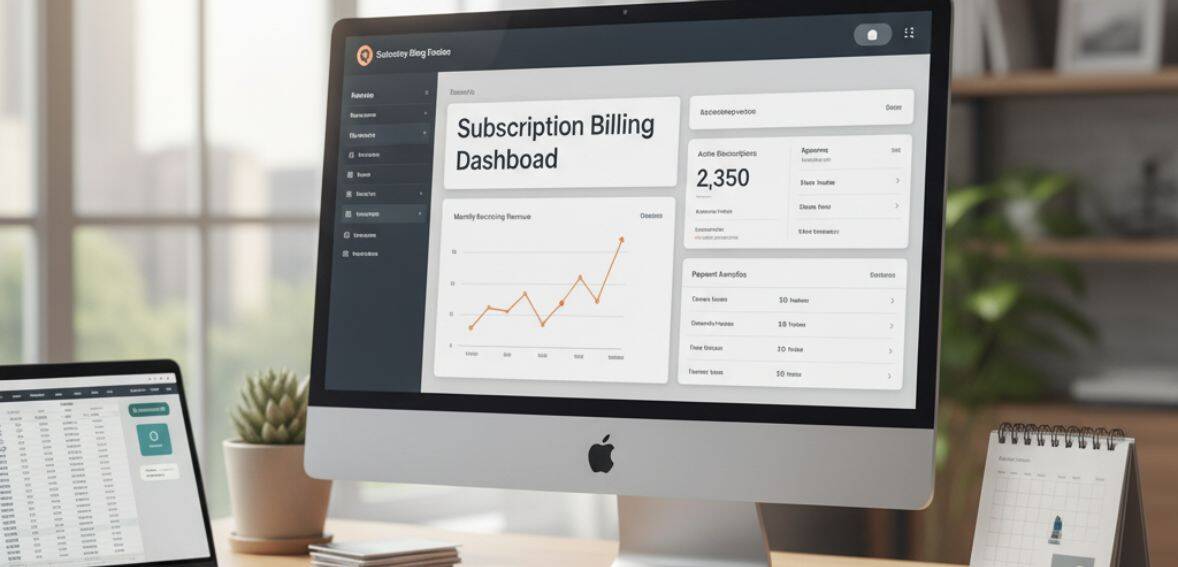
Monthly recurring revenue (MRR) is the amount of income a company makes every month from its subscription-based services. Monitoring MRR allows you to observe short-term trends, notice changes quickly, and track how marketing, sales, or product changes influence customers.
It indicates how effectively your company retains customers and if recent efforts are resulting in growth. Most businesses aim to increase MRR month by month. This helps growth stack over time. Focusing on keeping current customers happy is just as important—if old clients leave, even new sales won’t help much.
For long-term planning, annual recurring revenue (ARR) provides a broader view. ARR represents the total revenue anticipated from subscribers during a year. It facilitates budget planning, cash flow, and investments. ARR provides a yearly prediction, while consistently striving to improve MRR to sustain growth.
Calculating Monthly Recurring Revenue
Calculating monthly recurring revenue (MRR) is crucial for contractors providing subscription-based maintenance or service plans. The easiest way to determine is:
MRR = New subscription revenue from new customers + Subscription revenue from existing customers + Add-ons or upgrades – Subscription revenue lost from canceled or downgraded accounts.
It’s worthwhile to break down new business from existing customers. This enables you to observe how long customers typically remain and not assume everyone will renew by default.
Upsell clients to upgrade their services or purchase additional features, such as periodic upkeep or crisis support, to boost MRR. In the meantime, monitor the lost MRR from canceled or downgraded clients.
Remember that lost and new registrations are both frequent, and there may be some months that are busier than others. For instance, there might be more customers who book HVAC or landscaping upkeep during spring and summer. Accounting for such variations provides a true picture of recurring revenue and enables your resources and workforce to be planned appropriately.
How to Calculate Annual Recurring Revenue (ARR)
After determining your monthly recurring revenue (MRR), it is easy to calculate annual recurring revenue (ARR). Simply multiply your MRR by 12 to determine how much revenue you can expect within a year.
Formula:
ARR = Monthly Recurring Revenue (MRR) × 12 months
This gives contractors a clear picture of yearly income from subscription services or maintenance plans. ARR helps to plan budgets, staffing, and resource allocation while giving a solid estimate of long-term cash flow for your business.
Important Recurring Revenue Metrics to Know
For contractors offering maintenance plans, tracking the right metrics is essential to understanding business performance. Begin with top most metrics such as monthly recurring revenue (MRR) and annual recurring revenue (ARR) to understand expected income from running subscriptions, in addition to average revenue per customer to assess individual client contributions. Customer metrics are also very very important.
Track customer acquisition cost (CAC) to observe how much it takes to onboard a new subscriber, customer lifetime value (LTV) to forecast overall revenue per customer, churn rate to follow cancellations, and retention rate to gauge loyalty.
Growth metrics like net revenue churn rate and customer growth rate assist in evaluating expansion and lost revenue from cancellations compared to the addition of more services. Efficiency metrics such as LTV to CAC ratio and months to recover CAC indicate whether it is profitable to gain new clients and how long it will take to recover the expense.
Don’t forget to track usage and engagement metrics, such as active subscribers and service usage frequency, and identify loyal clients to find opportunities for upselling. Lastly, financial metrics like gross margin provide more better visibility into the profitability of subscription services after expenses
Advantages of Subscription-Based Maintenance Plans
Subscription-based maintenance plans are a very clever approach to creating recurring revenue streams for contractors providing maintenance services. Contractors offer both equipment use and support on an ongoing basis through a subscription model.
The model is very flexible for customers, who are charged only for what they consume, making it more appealing for companies with seasonal or fluctuating needs. Contractors, in turn, enjoy steady recurring revenue which provides them a predictable cash flow.
Ongoing maintenance guarantees very fewer breakdowns and much more seamless operations for clients, not only minimizing downtime but also generating trust. By regularly providing support and reliability, contractors make solid long-term customer relationships and differentiate themselves from competitors.
Challenges of Subscription-Based Maintenance Plans Implementation
Even with all the benefits, contractors also have a few challenges they have to prepare for. One of the biggest is pricing. Pricing reasonable and sustainable rates while addressing equipment expenses, labor, and upkeep can prove challenging. Logistics is also an issue, as contractors need to ensure equipment is in hand, kept in good working order, and shipped in a timely manner to multiple customer locations.
Service level agreements (SLAs) are also involved—contractors need to specify response and quality levels that can be challenging to meet with limited assets. With increasing demand, scalability is also an issue, as with rising demand more customers will require more equipment and trained personnel to ensure service quality which can become overwhelming to handle.
Lastly, technology integration brings complexity. Contractors frequently require multiple systems—such as CRM, asset management, and finance applications—to seamlessly enable tracking of subscriptions, maintenance, and payment.
Things to do Before Getting Started with Subscription-Based Maintenance Plans

Implementing and accepting a recurring payment or subscription billing system requires some planning. Ask your existing customers what types of subscription services they’d be interested in. Propose seasonal upkeep or periodic check-ups and note their responses. This allows you to develop plans that individuals actually want.
Check with other contractors in your location to see if they have subscriptions. See what services they have and what they cost. This gives you ideas and ensures you stay updated with market trends. Check out payment software that has free trials. Try out the system to determine if it is intuitive, integrates with your accounting, and is suitable for your billing requirements.
Consider what services to bundle under each subscription. Offer monthly, quarterly, or seasonal subscriptions, packaging various services for each level. Ensure subscription services align with your schedule and generate revenue without interfering with ongoing work. Carefully plan so you can maintain quality service and still keep your business up and running.
How to Begin with a Subscription-Based Maintenance Plan
Select the Proper Billing Software
You will need good billing software to handle maintenance plans. Ensure that it complies with payment security standards, such as PCI DSS, to safeguard customer information. The software should also offer the features you require and preferably link with your accounting system. This simplifies tracking payments and automating accounting, saving time and minimizing mistakes.
Create Flexible Maintenance Plans
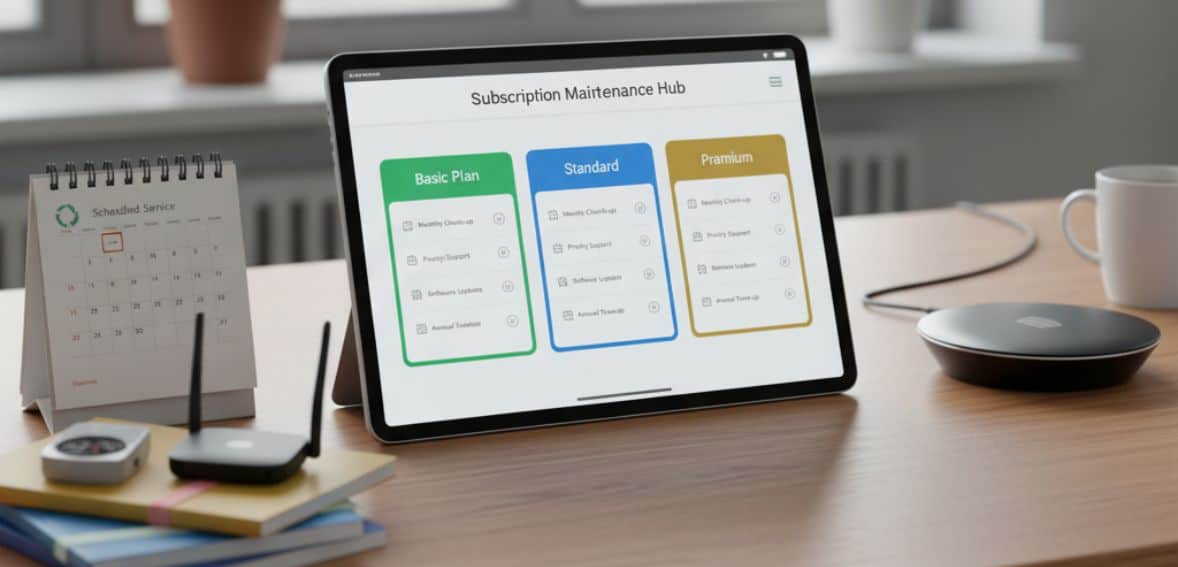
Provide plans to meet various customer needs. For instance, a standard plan may include routine maintenance, a basic plan may provide minor repairs, and a premium plan may provide emergency services. Your software must allow customers to seamlessly switch between plans so that they can move up or down from one billing period to another.
Automate Billing and Payments
Manual billing takes hours, so it has to be automated. Send payment reminders and facilitate recurring payments using software. This will ensure that even when customers forget to recall due dates you still enjoy a steady cash flow with recurring payments.
Set Clear Payment Terms and Condition
Transparency is paramount. Clearly describe the services covered in each plan and specify the payment terms. For instance, if a payment is delayed, the plan can be suspended until the balance is settled. Clear terms and conditions prevent misunderstandings and provide you with a reference in the event of disputes.
Provide Add-ons
Offer customers add-ons that make plans attractive. For instance, a plan for roof maintenance can have a pipeline fixing option. You can also give discounts on other services, such as installation or repairs as an add-on to the plan.
Offer Incentives for Sign-ups
Incentive customers to subscribe by providing savings or additional services. You can charge less for subscriptions compared to paying for each service separately, add free services as part of a package, or provide discounts to subscribers. Incentives make your maintenance plans more attractive in the market.
Tips to Maximize Revenue and Efficiency with Maintenance Plans

Providing a discount on a year-long maintenance plan saves the customer money, and the company receives full revenue for a year. This minimizes the risk of cancellations, but it will slightly make tracking monthly revenue more difficult.
Next let’s not forget automating, automating payments makes billing for regular maintenance services much more easier. Rather than keeping track of invoices and terms of the contract manually, payments can be withdrawn on autopilot from customers’ bank accounts or cards every month. Most CRM or subscription management software enables this easily, reducing wasted time and lost payments.
Automated reminders by email or app notifications can remind customers to provide updated payment information to avoid service disconnection. This direct method ensures prompt attention to payments without depending on in-house finance departments.
Accounting tool upgrades enable revenue to be tracked effectively. Integrated tools with your CRM enable real-time reporting on monthly and annual recurring revenue, customer retention, and average account size, thus making reporting accurate and easy.
Upselling and cross-selling enhance value in your maintenance plan. Through analyzing the history of customers, contractors can provide premium services or add-ons customers truly need to increase revenue. Enhancing onboarding ensures customers know their maintenance plan properly.
Simple instructions, convenient scheduling, and readily available support makes customers confident and satisfied with the service. Executing retention strategies enhances customer loyalty. Start with frequent updates, news, reminders of new services, and loyalty rewards to keep subscribers active and motivate them to renew their maintenance plans regularly.
Fundamental Tools for Handling Subscription-Based Maintenance Plans
Software plays an integral role in operating a successful subscription-based maintenance program. Several contractors employ technology similar to SaaS subscription management software to simplify and streamline managing subscriptions.
Renewal management software assists with monitoring customer renewals. With an increasing subscriber base, it’s simple to overlook renewals without an organized system. By employing this software, no revenue is ever lost due to the failure to notice renewal dates, and customers remain on top of maintenance schedules.
Revenue recognition software makes subscription accounting easier. Keeping track of when to recognize revenue can become complicated, particularly with various plans or add-ons. With the proper software, errors are avoided, compliance with accounting regulations is ensured, and potential legal or financial complications are avoided.
Next we have financial reporting and forecasting software that provides contractors with a good idea of their company’s well-being. It accounts for all of the subscription income, follows customer activity, and can forecast future cash flow. Reporting and forecasting allow contractors to make better decisions and plan for expansion.
Conclusion
Subscription-based maintenance plans are an effective means for contractors to grow their business while ensuring clients are happy. By offering steady service, stable cash flow, and versatile packages, contractors can strengthen client relationships and increase income.
FAQs
What is a subscription-based maintenance plan?
It’s a model of service where contractors maintain equipment or property on a routine basis for a flat fee, keeping it in top shape.
How are subscription plans profitable for contractors?
They enjoy stable revenues, improved cash flow, and improved client relationships with steady service provision.
Are clients able to tailor their maintenance plans?
Yes, plans tend to include multiple levels of service and add-ons, allowing clients to select the amount of coverage they require.
How do payments work within these plans?
Payments are typically automated monthly or yearly, simplifying billing for clients and contractors.
Are subscription plans ideal for any form of maintenance work?
They are most effective for ongoing services such as HVAC, plumbing, electrical, and property maintenance, offering consistent maintenance for clients and steady income for contractors.